



Catering for a Yoga Retreat in Marbella — What Wellness Organisers Need to Know
You’ve found the venue. You’ve built the programme. The teachers are confirmed and the retreat is filling up. Then comes the question every organiser eventually asks: who’s going to feed everyone — and can the food actually match the energy of the retreat?
In Marbella, where wellness retreats have become some of the most sought-after in Europe, the answer to that question matters more than most organisers expect. The right catering can elevate a retreat from good to unforgettable. The wrong choice — heavy food, poor timing, menus that clash with the retreat’s philosophy — can quietly undermine everything else you’ve built.
This guide is for retreat organisers planning an event on the Costa del Sol. Here’s what to know about retreat catering in Marbella, what to look for in a caterer, and how to get the food working with your programme, not against it.
Why Food Is the Most Underestimated Part of a Retreat
Participants rarely remember the exact sequence of the morning flow. But they always remember how they felt after every meal.
Food at a wellness retreat carries weight far beyond nutrition. It sets the rhythm of the day. A heavy lunch derails an afternoon yoga session. A poorly timed dinner leaves guests restless at night. A breakfast that’s rushed or uninspired signals, without a word, that the retreat’s attention to detail stops at the mat.
The best retreat caterers understand this. They work in sync with your schedule — building menus that support rather than compete with the work your participants are doing. Light and nourishing in the morning. Grounding and satisfying at midday. Calming in the evening. Every meal considered within the arc of the whole experience.
This is the difference between a caterer who “does healthy food” and one who genuinely understands retreat culture.
What Retreat Catering in Marbella Actually Looks Like
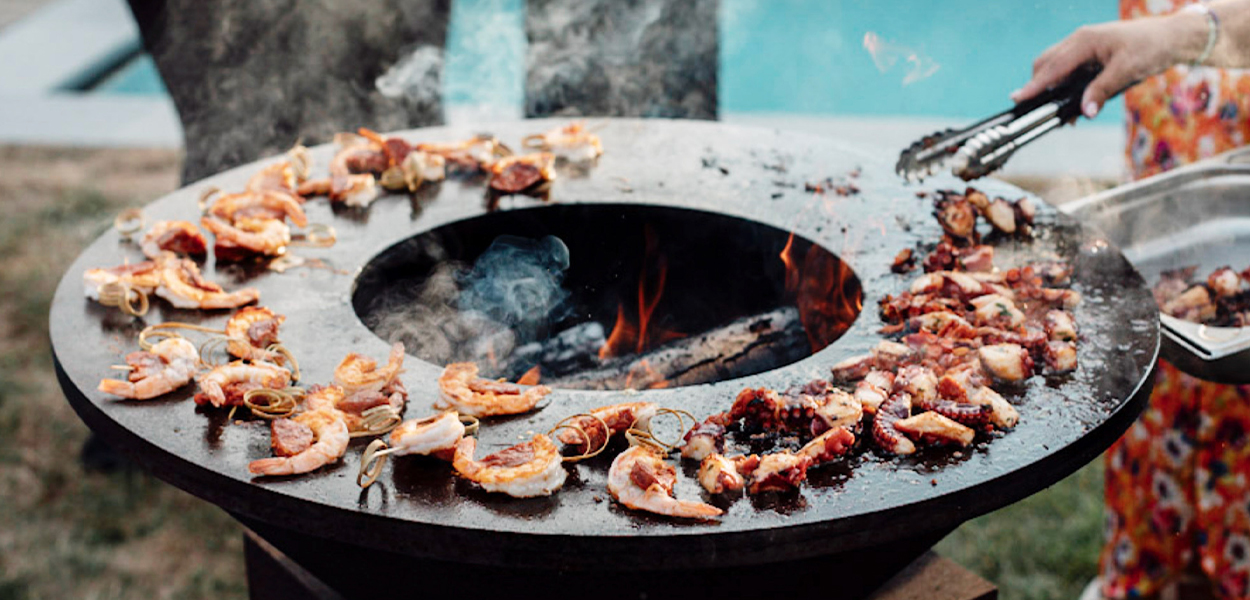
Marbella and its surroundings — Benahavís, Ojén, Estepona, the Golden Mile — offer a unique context for retreat catering. The climate means events happen almost entirely outdoors, often in villa gardens, on terraces, or at rural properties in the hills. That changes everything about how food is served.
Most venues don’t have commercial kitchens. A good retreat caterer brings everything: equipment, team, ingredients. They set up, cook on-site, serve, and leave the space clean. You, as the organiser, should not need to think about any of it once briefed.
At Campo, a typical retreat catering setup includes:
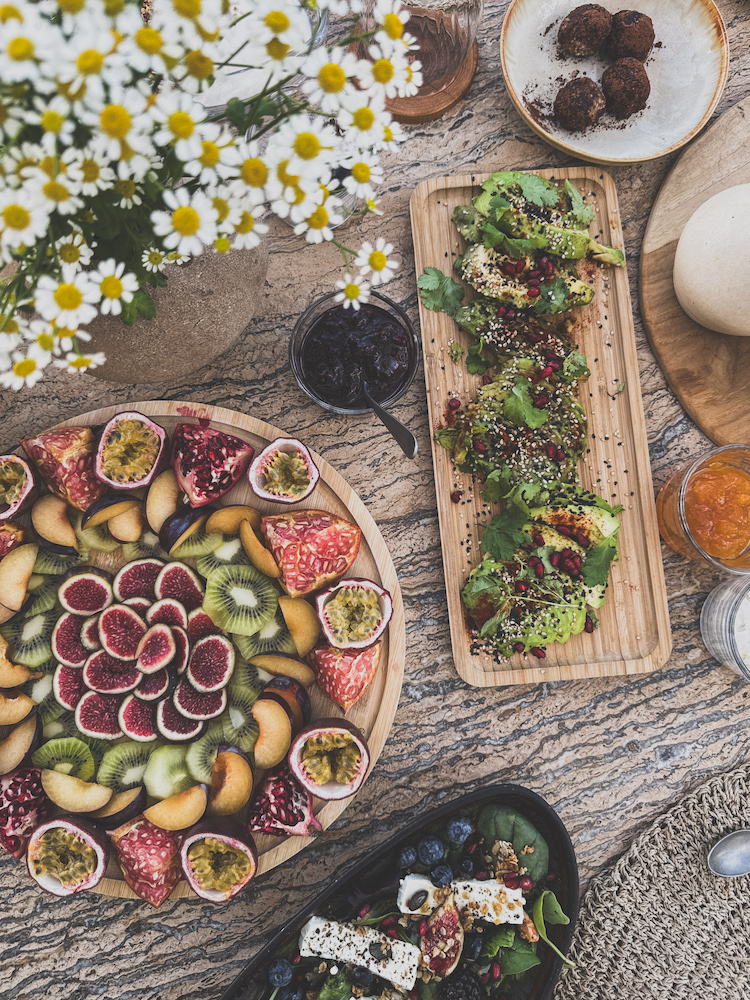
- Morning — either the Campo Morning Buffet (lighter, self-serve, set out before the first practice for slow grazing) or the Campo Signature Brunch (a more generous spread that bridges breakfast and lunch — ideal for retreats with a longer mid-morning or without a separate midday service)
- A main meal at midday — usually the most substantial of the day, often served sharing-style or as a build-your-own format
- An afternoon snack station — light, self-service, available between sessions
- Evening — a lighter, calming service designed for an early close to the day, either as sharing dishes at the table or as a two or three-course menu depending on the retreat’s rhythm
The exact format depends on your programme, your group size, and the dietary needs of your participants. But the principle is always the same: food that supports the body at each stage of the day, rather than interrupting it.
Menu Formats That Work for Wellness Retreats
Not all catering formats suit a retreat context. A formal plated dinner works beautifully for a private event — but for a group of 20 people fresh off a two-hour yoga session, it can feel rigid and slow.
The formats that consistently work best for retreats:
Breakfast buffet (self-serve): Participants arrive at different times after morning meditation or journalling. A generous buffet — porridge, fresh fruit, chia pudding, seeds bread, açaï bowls, yoghurt and granola — lets everyone eat at their own rhythm without waiting to be served.
Campo Signature Brunch (self-serve): For retreats with a longer mid-morning break — or where breakfast and lunch are combined into a single generous service — the Signature Brunch brings a fuller spread: warm savoury dishes, eggs, seasonal salads, fresh bread, sweet elements, and a drinks station. It covers both meals in one relaxed format and works especially well for groups who practice late morning and sit down together around noon.
Lunch bowl format: Each person builds their own bowl from a central spread — a grain base, seasonal vegetables, a protein, herbs, sauces. It’s nourishing, personal, and creates a natural moment of connection around the table. This is Campo’s most popular midday format for retreats.
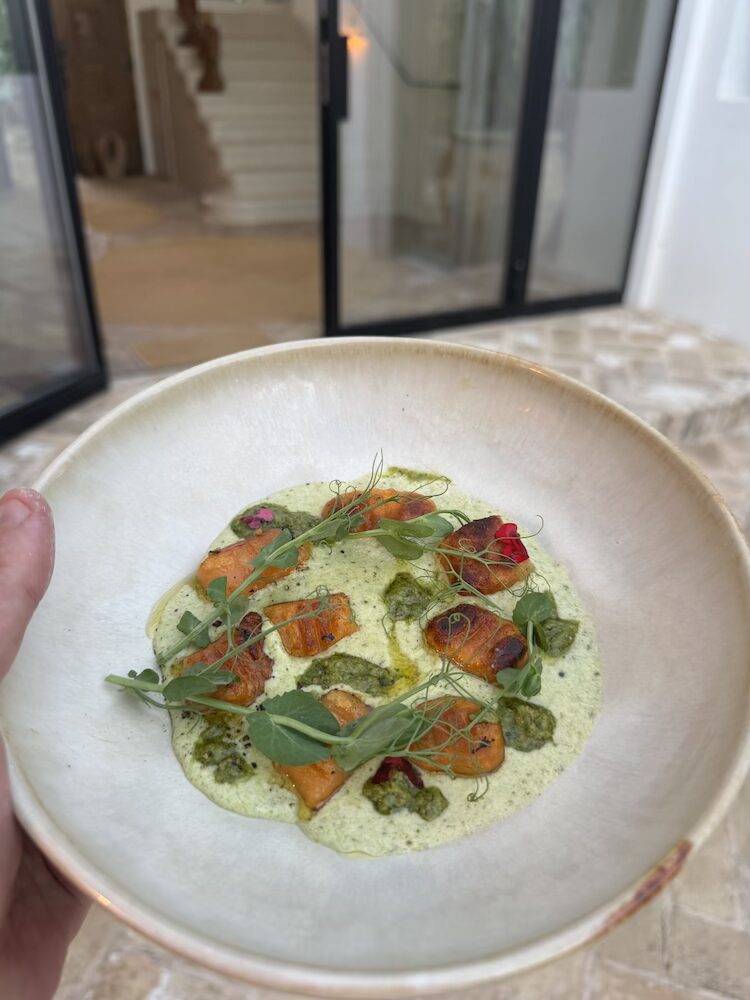
Sharing dinners: In the evening, a selection of dishes served at the table for everyone to share. It slows the pace, encourages conversation, and feels generous without being heavy. Depending on the retreat’s rhythm and the group’s preferences, Campo also offers two or three-course evening menus — a starter, a main, and a dessert served in sequence. Both formats work; the choice comes down to whether you want the meal to feel like a gathering or a moment of ceremony.
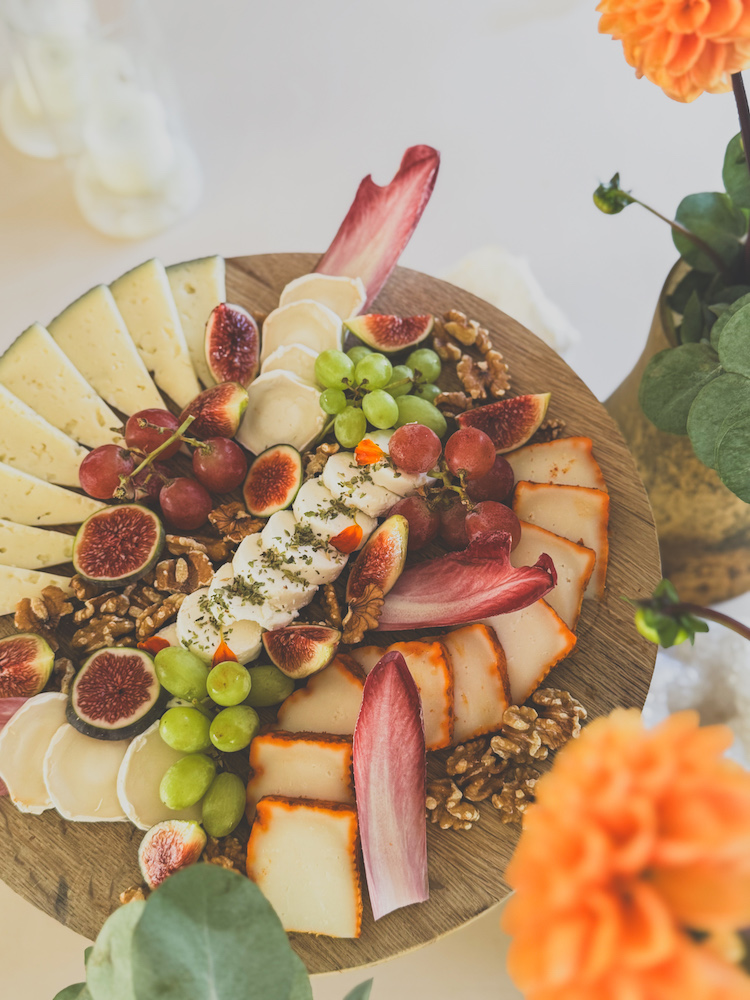
Snack station: Available throughout the afternoon — nuts, dried and fresh fruit, a homemade sweet snack at around 4pm, and a self-service drink station with infused waters, homemade lemonade, and herbal teas. No industrial soft drinks, no sugar crash.
Dietary Flexibility — How Campo Approaches It
Campo is not a vegan kitchen. It’s a full-service catering team that works across the full range — meat, fish, seafood, vegetarian, vegan — and adapts to whatever the group needs.
In practice, most wellness retreats request menus that are vegetable-forward, with fish or eggs as optional additions, and some groups are fully vegan. Campo builds those menus with as much care and technique as any other. A lentil dish with ras el hanout and slow-roasted tomatoes. A cauliflower prepared two ways — spiced and roasted, and as a silky mousseline. A breakfast bowl that’s genuinely filling, not just decorative.
But if your retreat group includes people who want grilled fish at dinner, or a meat option at lunch — Campo handles that too. The point is that dietary requirements don’t limit the quality of what ends up on the plate. Everything is designed with the same level of intention, regardless of what’s in it.
The Costa del Sol’s proximity to excellent local markets and quality Andalusian produce makes sourcing seasonal ingredients straightforward. Campo works with what’s good right now, which means the food reflects where you are — and that matters to retreat participants who have often travelled specifically for that kind of connection to a place.
If your retreat has specific dietary requirements — gluten-free, nut-free, low-FODMAP, or anything else — flag it at the briefing stage. The earlier we know, the more seamlessly we can accommodate.
How to Brief Your Retreat Caterer (And What to Ask)
A catering relationship works best when the caterer understands your retreat’s full context from the start. When briefing Campo, the questions that make the biggest difference:
- What is the philosophy of the retreat? (Detox? Nourishing? Energising? Calming?)
- What time does the first practice start, and when do participants typically wake?
- What are the dietary requirements across the group — and are there any strong preferences or restrictions?
- Is the venue equipped with a kitchen, or will you be working outdoors?
- How formal or informal do you want the dining experience to feel?
- Do you want meals to be a social centrepiece, or kept quiet and simple?
The answers shape everything from menu design to service style to timing. A five-day retreat for a group doing intensive Ashtanga practice will need very different food to a long-weekend restorative yoga retreat for beginners.
The best retreat caterers don’t just take an order — they listen to what you’re building and create food that serves it.
What Retreat Catering Costs in Marbella
Pricing depends on the number of participants, the number of meals per day, the format, and the length of the retreat. Campo prices per person per service — which makes it easy to see exactly what each component costs and to adjust based on your budget.
As a rough guide, a full-day package (breakfast + lunch + snack station) for a wellness retreat in Marbella typically ranges from €130 to €180 per person, depending on the menu complexity, number of services, and group size. Dinner added to the package, or a more elaborate menu format, will sit at the higher end of that range.
Campo provides detailed, transparent quotes with a breakdown per service and per day. No hidden costs, no vague packages.
If you’re planning a retreat and want to discuss catering options, get in touch via the retreat catering page and we’ll put together a proposal tailored to your event.
Why Organise Your Retreat in Marbella?
Beyond the climate, the venues, and the infrastructure, Marbella has become a genuine hub for wellness travel in Europe. Groups come from the UK, France, Germany, Scandinavia, and the Netherlands specifically for the combination of outstanding natural settings — the Sierra Blanca, the coast, the white villages inland — and the ease of access from major European airports.
Retreat venues in and around Marbella range from large private villas in Nueva Andalucía to rural properties in the hills above Benahavís, to intimate fincas near Ojén or Estepona. Each setting has its own character, and Campo has worked across all of them.
If you’re researching venues and want a catering partner who knows the logistics of each type of property — outdoor kitchen setups, access, equipment — we’re happy to share what we’ve learned.
Get in Touch About Your Retreat
Tell us about your retreat — dates, group size, location, and any dietary requirements — and we’ll come back to you with a tailored proposal.
Ready to Plan the Food for Your Retreat?
Campo has catered yoga retreats, wellness weekends, creative retreats, and production shoots across the Costa del Sol. We know how to work within a retreat schedule, how to design menus that support the work your participants are doing, and how to make the food a genuine part of the experience rather than a logistical afterthought.
Campo Marbella provides catering services across Marbella, Benahavís, Ojén, Estepona, Puerto Banús, and the broader Costa del Sol.